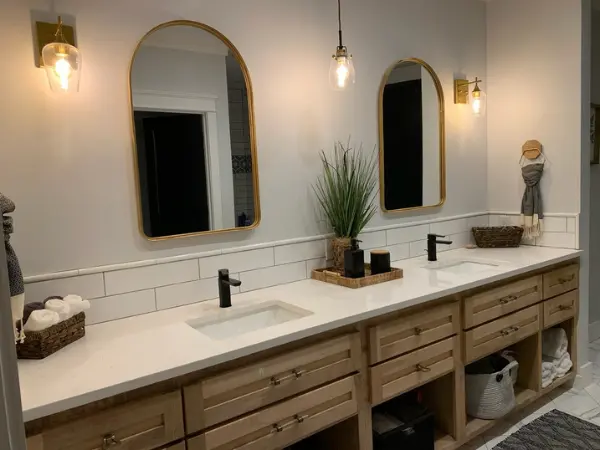
If you’re trying to figure out whether building a custom home in Kentucky fits your budget, here’s the honest answer up front: in 2026, most custom builds in our part of the state land between $130 and $350 per square foot, depending on size, finishes, and your lot. A national content farm will give you a number and move on. We pour these foundations every week in Western Kentucky, so this guide does something different — it shows you what that number actually buys, what pushes it up or down, and where budgets quietly go sideways before the framing is even up.
Building isn’t the same as buying. You’re not paying a single sticker price; you’re funding a series of decisions, and each one moves the total. Understand the levers and you stay in control of the budget instead of reacting to it.
The short answer: 2026 cost ranges in Kentucky
Kentucky is one of the more affordable states to build in. Statewide, a standard single-family home runs roughly $120 to $150 per square foot in 2026, while custom and high-end builds climb from there — premium work typically falls in the $150 to $220 range, and luxury or waterfront homes can pass $300 to $400 per square foot once you factor in elevated lots and high-end finishes.
For a 2,000-square-foot home, that translates to anywhere from about $260,000 to over $700,000 depending on how custom you go. The spread is wide for a reason: a “custom home” can mean a clean, well-built family house or a fully bespoke lakefront estate, and those are different animals.
One thing to clear up early: per-square-foot pricing is a planning tool, not a quote. Two 2,500-square-foot homes can differ by $200,000 based on finishes and site alone. Use the ranges below to set expectations, then get a real estimate before you commit numbers to a lender.
These figures exclude land. That’s standard across the industry, and it matters — your lot is a separate line item that can swing the project more than most people expect.
What actually drives the price of a custom home
Four levers control almost the entire budget. Once you understand them, every cost conversation gets easier.
Your land and site prep
The lot itself is only half the story. What’s under and around it often costs more than buyers anticipate. A flat, cleared parcel with utilities at the road is the cheap scenario. A sloped lot, poor soil, or a property that needs a well, septic, or a long utility run adds real money before construction begins. A standard foundation for a 2,000-square-foot home runs around $26,000, and adding a basement can layer on $10 to $100 per square foot depending on soil and drainage.
This is exactly where waterfront builds on Kentucky Lake and Lake Barkley diverge from inland ones — beautiful lots, but they frequently demand more engineering, grading, and access work.
Square footage and design complexity
Bigger isn’t just more square footage at the same rate. Rooflines, ceiling heights, custom angles, and intricate layouts all raise the per-square-foot cost because they take more labor and material per foot than a straightforward plan. A long, simple rectangle is cheaper to build than the same square footage broken into wings and bump-outs.
This is the stage where smart planning saves the most money. Getting the design right before anyone breaks ground is far cheaper than changing it mid-build, which is why our custom home plan design process front-loads those decisions.
Materials and finish level
Materials make up roughly half of total construction cost, and finishes are where a budget can double without the home getting a single square foot larger. Stock cabinets versus custom millwork, vinyl versus stone siding, builder-grade fixtures versus designer selections — these choices compound across every room. The structure of two homes can be nearly identical while the finish packages put them $150,000 apart.
Labor
Labor accounts for roughly 30 to 60 percent of the total, and it’s one area where Kentucky works in your favor. The state’s labor rates sit below the national average, which is a big part of why building here costs less than in many regions — more on that below.
A realistic cost breakdown for a Western Kentucky build
Here’s how the tiers shake out for a typical build in our service area in 2026, excluding land and site work:
| Build tier | Cost per sq ft | 2,000 sq ft | 2,800 sq ft |
|---|---|---|---|
| Standard custom | $130 – $160 | $260,000 – $320,000 | $364,000 – $448,000 |
| Premium custom | $160 – $220 | $320,000 – $440,000 | $448,000 – $616,000 |
| Luxury / lakefront | $220 – $350+ | $440,000 – $700,000+ | $616,000 – $980,000+ |
A “standard custom” home here is genuinely custom — your floor plan, your selections — built efficiently. “Premium” steps up the finishes and architectural detail. “Luxury” reflects the high-end estates and waterfront homes where lot conditions and bespoke materials drive the number. You can see the range of what we build across these tiers in our custom home building work.
Why building in Western Kentucky costs less than Louisville or Lexington
Kentucky as a whole carries a construction cost index of roughly 86 percent of the national average, thanks to affordable land and below-average labor rates. Within the state, the metro markets — Louisville and Lexington — typically run 10 to 15 percent higher than the rest of Kentucky because of land prices and demand.
That’s an advantage for buyers in our region. Inland lots around Benton, Murray, and Paducah are generally more affordable than comparable metro parcels, and local labor keeps build costs reasonable. The one exception is waterfront — desirable lots on Kentucky Lake and Lake Barkley carry a premium, which is why those builds land in the upper tier even when the home itself isn’t extravagant.
Should you build or buy in today’s Western KY market?
This is the question underneath most cost research, so it’s worth answering directly. In Kentucky, building new is increasingly competitive with buying an existing home. A new build averages around $195,000 for a typical home against a median resale near $220,000 — and that’s before you account for what new construction saves you afterward.
A new custom home means no immediate repairs, modern energy efficiency, a structural warranty, and a layout built around how you actually live rather than how the previous owner did. Resale homes carry deferred maintenance and renovation costs that rarely show up in the purchase price. When buyers tell us a resale “needs a little work,” that work is often where the real money goes — and if you’re already considering major changes to an existing home, remodels and additions may be the smarter middle path.
Where custom home budgets blow up — and how to protect yours
After more than two decades of building in this region, the budget surprises are almost always the same handful of culprits. Plan for them and your build stays on track:
- Site conditions discovered after purchase. Soil, drainage, and access problems are the classic overrun. Have the lot evaluated before you buy, not after.
- Change orders. Every change after construction starts costs more than it would have on paper. Decisions made during design are cheap; decisions made during framing are expensive.
- Allowance creep. Budgets often set “allowances” for finishes — flooring, fixtures, cabinetry. Walk into a showroom and it’s easy to blow past them. Know your allowances and shop within them.
- Skipping the design investment. Spending on a solid plan up front (architect or designer fees typically run 2 to 15 percent of the build) prevents far costlier mid-project changes.
Pro tip from the field: Build a contingency of 10 to 15 percent into your budget from day one. The homeowners who plan for it are the ones who never feel its absence. The ones who don’t are the ones making hard cuts halfway through.
The single best protection is a builder who prices honestly and communicates before costs change — not after.
How long it takes (and why the timeline is a cost factor)
A custom home in Kentucky typically takes 6 to 12 months to build, depending on size, design complexity, and weather. Permitting in Kentucky is relatively quick — often two to four weeks — which keeps projects moving compared to more heavily regulated states.
Timeline matters to your budget because time is money in two directions. A longer build means more months of carrying costs and more exposure to material price swings. A rushed build invites mistakes that cost more to fix than they ever saved. A realistic, well-managed schedule is part of cost control, not separate from it.
Getting an accurate number for your build
Here’s the takeaway: the ranges in this guide will tell you whether building fits your budget, but only a real conversation about your lot, your plan, and your finishes produces a number you can take to a lender. The per-square-foot figures are your starting point — the levers above are what you actually control.
If you own land or have a lot in mind, that’s the fastest path to a precise estimate. We’ve been building homes across Western Kentucky and Northwest Tennessee for over 23 years, and we’ll give you straight numbers, not a sales pitch. Request a free quote and we’ll walk through what your specific build will cost.
Frequently Asked Questions
A standard home runs roughly $120 to $150 per square foot, while custom builds range from about $150 to $350+ per square foot depending on finishes and site. A 2,000-square-foot custom home typically falls between $260,000 and $700,000, excluding land.
Building is increasingly competitive. A new build averages around $195,000 versus a median resale near $220,000, and new construction avoids the deferred maintenance and renovation costs that often come with an older home.
No. Per-square-foot construction costs exclude land and site preparation. Your lot, along with grading, utilities, and foundation work, is a separate part of your total budget — and on waterfront lots it can be a significant one.